
Why Blood Sugar Could Be Abnormal Before Diabetes: The Early Metabolic Red Flags
Find out why you may have problems with blood sugar levels before diabetes, the symptoms of insulin resistance, and important prediabetes tests.

Early symptoms of diabetes: Your blood sugar level doesn’t suddenly turn abnormal one day.
Before you get diagnosed with type 2 diabetes, you could experience metabolic changes that could happen long before that. You might become insulin resistant; your pancreas would need to produce more insulin to keep your glucose level normal, and consequently, your blood sugar level would start to increase.
Sometimes, the only sign is the result of a blood test.
Some other times, you could observe changes that seem to have nothing to do with your blood sugar level, such as gaining weight around your abdomen, persistent fatigue, cravings, changes in your energy levels after meals, and inability to lose weight.
Or there might not even be any signs at all.
That is why early metabolic changes are hard to detect.
And the question is not: “Do I have diabetes?”
The question should rather be: “Is my metabolism already struggling?”
What Does “Abnormal Blood Sugar” Really Mean?
Glucose levels change throughout the day. When we eat, blood glucose goes up, then down as our bodies use it, which is mostly done by the action of hormones like insulin.
However, the trouble starts when the body starts to struggle with regulating healthy blood sugar levels.
An example of an important process here is insulin resistance.
Insulin is a hormone that regulates the absorption of glucose from the bloodstream and its use inside the cells for producing energy. Insulin resistance means that cells start responding less actively to insulin, which leads to increased levels of this hormone.
For some time, the body compensates for this phenomenon. This is why insulin resistance can occur without noticeable changes in blood glucose.
At some point, the compensation stops being enough, and glucose starts increasing. This is how prediabetes occurs.
Prediabetes Is Not Diabetes: But It Is an Alarm
Prediabetes indicates that the level of glucose in the blood is higher than normal but still lower than that required for diagnosing diabetes.
According to the existing diagnostic criteria, prediabetes can be diagnosed based on the following criteria:
| Test | Normal | Prediabetes | Diabetes |
|---|---|---|---|
| HbA1c | Less than 5.7% | 5.7 to 6.4% | 6.5% or Higher |
| Fasting Plasma Glucose | Less than 100 mg/dL | 100 to 125 mg/dL | 126 mg/dL or Higher |
| 2-hour OGTT | Less than 140 mg/dL | 140 to 199 mg/dL | 200 mg/dL or Higher |
This classification applies to non-pregnant adults, and diabetes usually requires retesting to confirm, except in cases of clear symptoms and certain diagnostic situations.
The key idea is that prediabetes is not only “a borderline sugar” that should be ignored.
It indicates an increase in metabolic risks as well as a high probability of developing type 2 diabetes, and is accompanied by risk factors for cardiovascular diseases.
Another important thing about prediabetes is that many patients do not have any symptoms at all.
Why Can Blood Glucose Go Up Without Diabetes?
There isn’t always one clear reason.
Metabolic well-being depends on the interaction between several factors, such as:
- Excessive fat around the abdomen
- Lack of exercise
- Genetics and family predisposition
- Nutrition and overall calorie intake
- Insomnia
- Older age
- Medication
- Polycystic ovary syndrome (PCOS)
- History of gestational diabetes
- High blood pressure
- Unusual cholesterol and triglycerides levels
- Some other conditions linked to insulin resistance
According to the American Diabetes Association, you should consider screening for diabetes and prediabetes according to your age and body weight.
It is crucial because you do not need to feel sick to have developing metabolic issues.
The One Early Warning Symptom that Most People Ignore: No Symptoms
Now you might be wondering, “How could that be?” But it’s actually one of the most crucial aspects to consider.
There is always the expectation that high blood sugar should provide some warning symptom:
“I should feel different if there’s a problem.”
But no, not necessarily. The fact of the matter is that prediabetes produces no clear symptoms.
Certain individuals might experience symptoms like increased fatigue, weight gain, waist gain, and/or skin conditions related to insulin resistance. However, none of these symptoms alone prove anything about prediabetes.
Which is why relying on symptoms for screening is unreliable.
In many cases, the early warning symptom is simply a blood test.
Who Should Be More Concerned About Early Glucose Levels?
Testing is especially important if you have any risk factors for developing prediabetes or type 2 diabetes.
These may include:
- A parent with diabetes
- Obesity
- Increased body fat
- Hypertension
- Elevated levels of triglycerides or low levels of HDL
- Inactivity
- PCOS
- Having gestational diabetes
- Cardiovascular disease
- Diseases that are linked with insulin resistance
- Increasing age
According to the current recommendations of the ADA, screening is advised in adult patients who are at increased risk, and all adults should be screened starting at age 35 and repeated according to the test results and personal risk factors.
If one has prediabetes, testing should be done at least once a year.
This will depend on your personal situation.
What Tests Diagnose Prediabetes?
There is no single test that captures every aspect of metabolic health, but prediabetes can be identified using HbA1c, fasting plasma glucose or a two-hour oral glucose tolerance test.
Tests used for diagnosing prediabetes include the following:
1. HbA1c
It reflects the average blood glucose level over about three months and does not require fasting.
2. Fasting Plasma Glucose
It is done after a minimum of eight hours of fasting.
3. Oral Glucose Tolerance Test
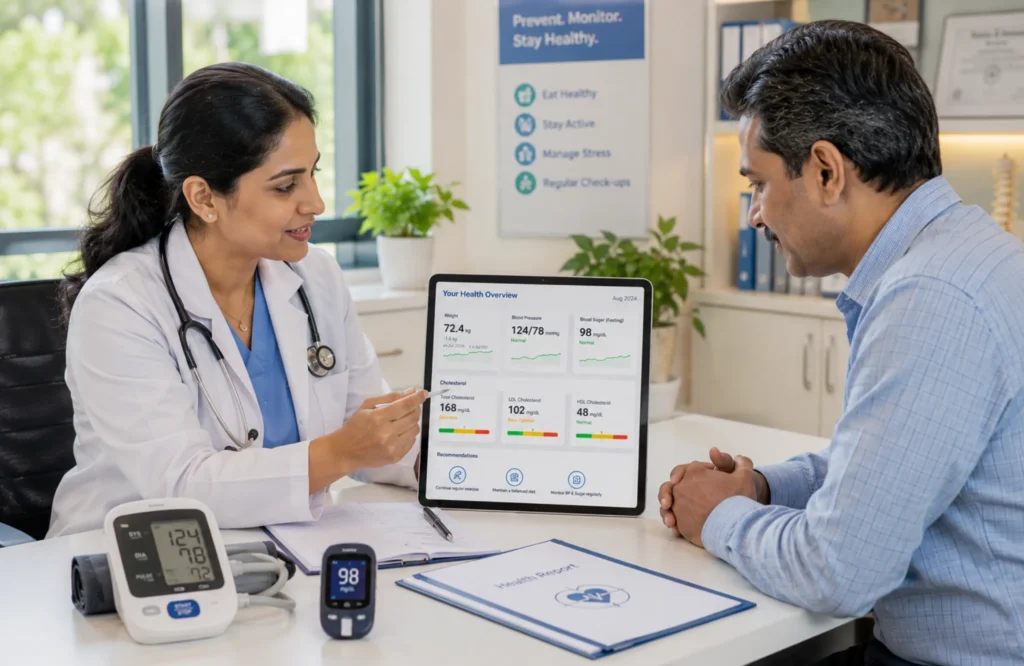
It checks how your body reacts to a known amount of glucose.
Which test is needed can be determined depending on the risk factors that you have.
Another thing to note: Do not diagnose yourself using just a glucose meter test result.
A diabetes or prediabetes diagnosis requires a correct laboratory test.
What Can Be Done If You See Your Blood Glucose Rising?
Here’s where the power of early detection comes into play. The presence of prediabetes doesn’t necessarily mean that one will develop diabetes down the line. Changes in lifestyle habits can prevent type 2 diabetes from developing, and weight management can prove helpful to those who suffer from excess weight or obesity.
It’s not very exciting, but it’s important.
1. Exercise
Physical activity helps with improving insulin sensitivity.
2. Gain muscle mass
Resistance training may help preserve muscle mass, which is vital in glucose metabolism.
3. Eat better
Pay attention to a healthy diet consisting of sufficient amounts of protein, fiber, vegetables and other minimally processed foods.
4. Get enough sleep
Insufficient sleep can make appetite and physical activity control more difficult.
5. Manage abdominal weight gain
If you notice that your waist circumference grows, maybe the focus shouldn’t be on your overall body weight, but rather on the risks associated with metabolic syndrome.
No need to wait until you have diabetes. This could be the most crucial point.
Now is when you need to figure out why this is happening, not once it crosses into diabetes territory.
Is Prediabetes Reversible?
The term reversible can sometimes be misleading. Prediabetes can be improved, and by modifying lifestyle habits, you may reduce the chances of developing type 2 diabetes, but you will not eliminate the risk just by bringing one blood test back within the normal range.
Imagine it as the chance to turn things around. If your HbA1c value has progressed from being within the normal range into the prediabetes category, this does not mean that your fate is sealed.
This is a perfect time for action.
When to Seek Medical Attention?
Do not wait until you develop symptoms if you are at risk for diabetes and your blood sugar readings have changed. A medical evaluation might put the numbers in perspective.
The doctor will consider:
- HbA1c
- Fasting glucose
- Oral glucose tolerance test if appropriate
- Blood pressure
- Lipid panel
- Body fat and waist circumference
- Liver function
- Family history
- Medication history
- Exercise
- Sleep and lifestyle habits
- Conditions linked to insulin resistance
The point is not just to diagnose someone as prediabetes. The point is to figure out why the metabolism numbers are changing and how to address them.
Conclusion: Don’t Wait for Diabetes Diagnosis to be Your Initial Red Flag
There could be metabolic changes going on in your body well before you get the diagnosis of diabetes.
It could come in the form of increased levels of HbA1c.
Or it could be recurring borderline fasting glucose.
Or it could be increasing waist circumference together with altered triglyceride and blood pressure levels.
Or perhaps there would not be any symptoms to notice.
This is exactly why metabolic health should be considered even before the onset of diabetic levels of blood glucose.
Don’t wait for the diagnosis before starting to ask questions.
If there are changes in your blood sugar, consider the bigger picture.
Know your risks.
Test the right markers.
Identify potential causes.
Act promptly.
As far as the management of your metabolic health is concerned, early information leaves you more options.
FAQs
1. What is the first symptom of diabetes?
There is no particular symptom that would predict the onset of diabetes. As prediabetes does not have any visible symptoms, changes observed during blood tests like HbA1c and fasting plasma glucose levels can be one of the first signs of diabetes.
2. Is blood glucose higher than normal when you do not have diabetes yet?
Yes. Blood glucose can rise into the prediabetic state before reaching the levels at which diabetes can be diagnosed. Prediabetes is characterized by an HbA1c level of 5.7–6.4%, fasting plasma glucose of 100–125 mg/dL, or an OGTT value of 140-199 mg/dL.
3. Is it possible to have insulin resistance without having blood sugar increased?
Yes. When the early stages of insulin resistance occur, the body will produce excess amounts of insulin, maintaining normal levels of blood glucose. The latter can start increasing once the body’s response fails.
4. Does prediabetes cause symptoms?
No. Prediabetes does not usually cause any symptoms. That is why screening is needed for patients with risk factors.
5. When should a patient have their glucose checked? It is important to note that how often a patient should check their glucose depends on several factors, including age, risk factors, and previous test results. According to current guidelines from the ADA, prediabetic individuals should have their glucose checked annually, whereas those without any other risks should begin at 35 years old.